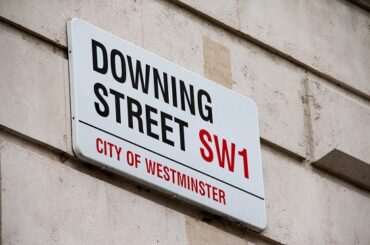

So we enter a new era with Labour ‘less trusted on the economy than Liz Truss’ Conservatives according to the last YouGov Poll. Indeed, the descent of the Labour dream seems to have been as sharp as the fall in YouGov’s share price now somewhat sorry for itself too and like Labour’s fortunes.
I predict a rebound for YouGov’s share price over the next few years as demand for its services is likely to rocket in the new political environment especially.
As for Labour’s chances – sadly the Government seems to have ‘blown it’ when the majority was keen to not only ‘give it a go’ but gave it the chance to prove itself but sadly that has not been the outcome – and demonstrated in record time after starting sleazily before day one with all those free togs.
As for the economy – that’s down 0.1% (again) and impacted by consumer and business confidence being shot in anticipation of the Budget and the incessant government leaks and kite-flying – wholly wrong. The positive is that it adds to the present rhetoric that the Bank of England will be able to cut interest rates next time – maybe by a whole 0.5%. That would be good and despite dropping on the news and maybe fuelled by the Dollar’s own drift on its rate cut, Sterling seems sanguine about the prospect too, so the backdrop is in place.
Unemployment is up again as the graph keeps going the wrong way – now at 5.1% and considerably worse if considering the over one million extra sickness claimants since before Covid who are not in work or seeking it. I am afraid it is going to worsen, as the baseline cost to employ is now so high and the welfare cushion from not working being so compelling to so many. I am reminded of Saatchi and Saatchi’s most successful campaign for Margaret Thatcher in 1978 which noted ‘Labour isn’t working’. It will be rolled-out again, at this rate.
As for the BBC and its diplomacy errors when the spliced recordings were raised – what struck me was its arrogance; no real apology about what had been a clear political expedient to manipulate the truth and undermine Donald Trump’s election chances, no investigation into who was actually responsible and reprimands or sackings taking place and is it any surprise it has ignited the ire of President Trump, love him or hate him – won’t people learn? It will be licence-payers and taxpayers who pick-up the tab.
Markets

It is still a difficult tightrope to walk. US over-valuation is as extreme as ever and the speculative froth over there most disconcerting. The UK, despite all the political and economic foibles, remains very good value overall even if some sectors have advanced strongly and perhaps too strongly now (eg banks).
Indeed, take Barclays as an example, now back to levels seen last in 2008 but even then, that was 36% off the January 2007 levels when they seemed ‘cheap’. They went down to 93p on 28/2/09 but saw that level again on 31/3/2020. Perhaps what is more remarkable is that even on 31/10/23 they were as low as £1.31 and have since bounced by two-and-a-half times. We were filling our boots but we were pretty alone – we’re now all out.
However, overall income yields in the UK are strong and won’t wobble regardless of what happens to the US tech sector. UK (and global generally) smaller companies offer attractive valuations too so there remains a surplus of things to buy at very cheap levels and which could provide exemplary out-performance regardless of mainstream market upsets.
Shall we enjoy a ‘Santa Rally’ this year? The sentiment is trying to hope for that but when things generally are expensive it is harder to keep pushing things up yet again. I am reminded that in 1999 the market peaked on the last day of the year – maybe that is the US market’s fate in 2025.
Bullion – where now?

Gold and silver have taken centre stage for investors over the last few years with impressive gains. We have enjoyed some embarrassingly good returns from these long-neglected assets (primarily gold and silver) but we have to be realistic and say they are no longer what we were buying. We have held real silver as a defensive asset, as well as a hedge against shares and other things and it did a good job with limited volatility during Covid and beyond. However, it cannot be said to be that anymore – why?
We have held gold before too but silver was the more compelling buy as it was at multi-year lows measured against its yellow brother as well as fundamentally being so out of favour – for this ‘value investor’ it was simply too cheap but as is often the case, a big dose of patience was required. Remember, it was a defensive, hedge asset for us and far better than overpriced government bonds but on the results achieved, that can’t endure now, so what should we do?
We have bought physical silver not in heavy ingots but the WT Silver paper asset and since the 2/9/22 low of $15.73 when ‘investment grade bonds’ were the hottest ‘safe’ property going (how wrong was the consensus but not us, when we had absolutely none!), it is now over $63. We also took a view on the expensive US Dollar and bought the Sterling-hedged version. That has gone from £14.56 to over £44.48, so frustratingly the hedge protection costs have cost us even though our call on the Dollar was spot-on. However, which low risk investors can complain about a 205% gain in that time? Isn’t it ridiculous.
Our problem is that it is neither cheap now nor a safe asset. Despite its industrial usages, its price, at all-time highs, is elevated and mining output is rocketing as the price encourages that (and we have done very well out of mining Trusts and companies too, in mainstream strategies, most of which we are maintaining as they have geared profits to their high commodity prices and most enjoy deferred results). We have trimmed a little of the WT fund but have run the position, albeit struggling to add more as its price escalated.
The question is – what other cheap, uncorrelated precious metal could we use instead? There isn’t one, so there are two lessons – don’t chase but also look for the next unloved asset but for pure defensive strategies that is now made very hard indeed, though we have just added a useful commercial loan Trust at a discount to the value of its underlying mortgages and giving us an income of almost 10%pa… we shall keep trimming our silver till it is all gone, wishing recent buyers out there all the best for more gains but clearly the risks are now significant and for a big retraction.
And if you still need to be convinced, read-up on the Klondike Gold Rush – a great testament to excited hope being confused with reality. And then, imagine what could happen to the gold price if we can access 16 Psyche… look it up – a pipedream presently but! Maybe there are still vast untapped gold seams on Earth, maybe under the Ocean? I suspect there are.
Meantime, within reason and the usual vast diversification we pursue, we are already filling our boots with what we think could be one of the most unloved types of value asset classes out there now and one which should protect us through a downturn too – as it has tangible underlying valuation characteristics and priced at a deep discount. All our clients with mainstream strategies will have useful quantities already, so if you have a New Year resolution, send us some funds if you want to participate too by joining our Exclusive Club!
I am told an ounce of silver is worth more than a barrel of oil now. Just think of the energy output which the oil can create, multiplying its economic value exponentially, versus the ingot sitting there looking pretty and costing you money to hold it, the most conductive material in existence or not!
Ethical investing – ‘sustainable’ just isn’t sustainable any more

Interestingly, the demand from investors for ESG-only investments has plummeted and it seems the principle is becoming ‘unsustainable’. Cynically, this is partly because of atrocious returns from many of the funds sold to well-intended investors to satisfy the constrained criteria and added to that, they won’t have any gold or silver either as mining despoils the environment.
Long-term readers of this missive will know our cynicisms about expensive products, sold to honourable and well-intentioned investors but not being able to ever achieve the outcomes which the investors perceived were being offered. Crucially, all other legitimate, highly regulated investments are not unethical and nor are the investors in them.
We continue to offer an ‘unethical exclude’ for core areas and appreciate exactly why, say, investors may not wish to participate in certain sectors but even then, whilst the ‘ethical’ industry may say no to pornography, say, or animal experimentation etc, great marketing tools to suck-in unsuspecting, albeit naïve investors, try to find such ‘evil’ investments anyway, even if you wanted to participate in those!
Instead, their ‘sustainable’ investments are full of tech companies whose practices with algorithms as well as facilitating unsuitable material from paedophilia to extreme pornography (accessible to children too) to gambling, financial scams, false news, election manipulation, cyber hacking et al are there and no-one is doing enough against this. This investment ‘game’ is never easy but the warning is – don’t be sucked-in to the latest hype as it will cost you and many will become very rich by feeding your insatiable demands.
Indeed, battery storage fund Gore Street Energy, an ideal candidate for the green investor, announced a reduction in its calculation of the net asset value and the shares fell 10% – a great disappointment but now likely to be a good investment with a strong income from this point forward but just over 50p is no consolation to those who bought at £1 or more. However, such slippage is another nail in the ESG investor’s coffin of underperformance since when the concept was heavily promoted to him. Sadly we hold the shares but didn’t buy anywhere near the float. All considered, a fair price may be some 50% higher than now – for the patient! Saba has doubled its stake since the news too.
Quotations

Thank you JP Morgan Cazenove for reminding me of a few useful quotes:-
“The best type of risks to take are ones where (1) the worst outcome is manageable and (2) the best outcome is life-changing.” — James Clear
“Reversion to the mean is the iron rule of the financial markets.” — John Bogle
Those are both great anecdotes not to forget when looking-after our money. The second one, particularly, is a sobering reminder when we look at over-extended prices of assets of any type. More often it is a case of crying-out for attention but at the time, it feels great to be with the crowd chasing the euphoria higher.
Good news/bad news

Pleased to report that the Court sanctioned Hansa’s merger which should see the discount contract over time. The shares rise 8% regardless – all good news. SDCL Energy Efficiency suffers another blow for the ‘Green’ investment sector noting it needs more capital to grow and must cut its debts so the shares slump 16% despite posting a good profit and maintaining solid dividends. This is another of Saba’s targets so its 5% stake (since doubled on the fall) is impacted too – interesting.
Who’s been watching Saga? From 74p to the depths of the pandemic to still under £1 in September last year, the shares are now trying to push towards £4 with the old owner at the helm again. Interesting! We can’t complain but patience was necessary! This is now way above the 2014 float price of £1.85.
Investment culture

The FCA wants to encourage a better ‘investment culture’ here. JP Morgan has done some research and noted that those in Cash ISAs have lost £500billion by not being invested in the markets these last few years – an interesting analysis. Who said ‘no risk’ meant losing that much money, especially when inflation eats-away at its real value!
The FCA stimulus is on the back of the statutory obligation imposed upon it and reiterated by the government to stimulate economic growth too. However, when the FCA’s own staff pension schemes have hardly anything in UK equities it is a tad hypocritical if it can’t even ‘nudge’ its own investment managers that way.
‘Do as I say and not as I do’ isn’t helpful! Incidentally, these percentages are way below the private sector which has c25% in the UK markets. And as for regulating crypto currency – please don’t get me started… what scams should be regulated too ahem!
Maxims – being a better investor – from the ‘Basil of Barnstaple’

I hope you have enjoyed the 40 maxims in our 40th year. We shall keep repeating odd quotes etc over future weeks!
My best wishes
Philip J Milton DipFS CFPCM Chartered MCSI FPFS FCIB
Chartered Wealth Manager
Fellow Of The Personal Finance Society, Fellow Of The Chartered Institute Of Bankers