
Some news’ improvement amongst the negative developments in the Middle East (again) – US inflation went down to 3.5%, somewhat unexpectedly. That should give some respite in interest rates and the strength of the Dollar. Meantime, here at home our economy grew by 0.1%, led by services.
It’s not much and it is primarily a small recovery from the savage hits from the Government’s dire handling of the economy but it all helps.
As for SpaceX, the share price has now dropped below its floatation price. As for its value? Just take your pick – we shan’t but we wish it well with its technological advancements! And for now, let’s hope that the ‘King of the North’ proves to be a shrewd pair of hands over the Country and the economy… we have to at least hope but can he control the backbenchers who want more welfare and bigger public sector pay rewards, fuelled by bigger taxes of course?
Meantime, it’s bad news here as there are now expected to be 7.7million people on a higher tax rate as thresholds are frozen. Those on the ‘Additional Rate’ are expected to have increased by 44% as well. Will that increase to a 50% tax rate as rumoured? I do wish they’d learn about the Laffer Curve…The good news about this is that more people are being paid considerably more, especially in the shielded public sector (meaning more taxes needed so we can pay that).
For financial advisers and tax specialists, this must mean there are plenty of advisory opportunities as to be frank, anyone paying higher rates of tax should enquire as to whether there is anything they can do to limit their burden at 40% and especially at 45% (if they are losing their £12,570 Personal Allowance at the same time, as well as poorer allowances (or none) for interest on savings etc). If that’s you, don’t bury your head in the sand! Contact us. If that’s not you, be grateful these people exist, as they pay the vast majority of all Income Tax so you don’t have to pay any or only 20%!
On top of this, the numbers of over 65-year-olds now paying tax are the most ever. I suppose that has to be a positive – they have more income but also, many have useful capital in ISAs etc, which are tax-free. It means too that more will have to file Tax Returns – we are here to help if you wish.
Work opportunity

We remain extremely busy, for which we are very pleased and continue to welcome applications from prospective candidates who’d like to join our Team. We have a number of possible openings and all depending on candidates’ experience and capabilities, each demonstrating a good dose of care for their work and clients, attention to detail and diligence – we shall train everything else happily. Good English command is necessary. If you know someone who might be interested, please drop us a line with a CV and we shall reply.
Oiling cogs

So crude oil is seen primarily as a fuel for energy, including transport and heating. However, as noted previously, when there was a supply break, other industry usages caused extra distress too. But what does a barrel produce? It makes everything from butane to bitumen, with gasoline, jet fuel, diesel, naphtha and fuel oil in between and all of these are in fairly fixed proportions.
Yes, different oils produce slightly different mixes and refineries can be created to prioritise one type over another but with only minor differences. Airlines are affected significantly as their fuel is such a large part of their business model, so price changes have a large impact (Ryanair cited about 35% of its revenue was covered by fuel related costs in 2025 for example).
If all the other important products are considered, oil is refined into thousands of petrochemicals which are the foundation for over 6,000 everyday items from plastics to synthetic fibres, cosmetics, pharmaceuticals, medical technology and synthetic rubber. Are we sure we are ready to be weaned from oil yet? I don’t think so, in the slightest.
Afternoon tea

Cancer affects all of us and our clients, family and friends are the same. Two of our ladies are joining the Breast Cancer Now Afternoon Tea appeal to raise money.
Are you free between 1pm and 3pm on 14 August to come to Barnstaple and to have a cup of tea? Both have been affected by breast cancer in their families and indeed, so have many across the country, so a very worthy cause.
They and other staff and family and friends will be baking cakes for donations from visitors! Well done Sarah and Viv for the initiative!
Commodities

Clients will know that we add commodities to strategies – on the dual premise that ‘they’ have to be cheap and also that they are pretty uncorrelated to what is happening generally with shares. Of course, there are different ones and bullion is included (well, when it was cheap!)
We missed a trick with Cocoa which has more than doubled since March on fears that a Super El Niño will have an impact there. We had Cocoa before and did remarkably well before it plummeted but just as chocolate lovers will have been relieved at the slump in prices, they are on the march again.
Coffee has also been roaring away. Financial instruments which either hold the physical commodity or replicate it are excellent to provide access. We have sugar, cotton, wheat and nickel as four somewhat depressed commodities. Readers will remember we were too embarrassed to hold our silver any longer after such a tremendous run – it’s now half its recent peak.
And what about our electricity? Green investors were keen to support energy storage companies like Gresham House and Gore Street Energy but they haven’t all done what investors would have hoped. Gore Street has to write-down its asset values again (but academic unless it is forced to sell) but the underlying results are beginning to reward and the dividends for now are still strong at 7p a year – over 15%. Gresham House has recovered strongly whereas Gore Street still needs to do things to see a recovery from present figures. We moved-in too soon perhaps but still feel sorry for those launch investors who have seen a significant descent in the share price, or those who paid £1.23 in 2022 when everybody chased ‘ESG’ investments. That is the problem sometimes – a good idea can be seriously over-priced for the reality.
Good news/bad news

One of our larger generalist Trusts, RIT, has announced a buy-back of £300m of shares at a 15% discount to the underlying asset value. The shares advance and we are forced to accept the offer as the discount at which we can then rebuy our stake is around 20%. Regardless, for the shares we tender brokerage-free, it’s a special 10% bonus for investors and for nothing and it is a useful opportunity to top-slice from when we started buying these quite cheaply anyway, to redeploy other funds elsewhere. Remember, this sort of situation only arises with quoted funds – not with unitised holdings which most investors ‘out there’ hold only.
On the downside, Vistry’s Chief Finance Officer resigns for a private job and the shares fall a further 9% despite a nigh £4billion order book and projections of £100million cash after reducing debts – what more can go wrong there? From £13.59 in August 2024 to that low was lining-up for a 90% decline so feel sorry for those who bought the shares then… we first bought when they were very cheap but since they have become cheaper still but we hold for now and indeed they have rebounded a little. At around £800million total market capitalisation and potentially generating £200m of profit despite the news, they are likely to recover and that could be significant and not through superstition.
Then Capita announces possibly £40million to resolve the serious problems with its administration of the Civil Service Pension scheme but masking the good overall results and progress elsewhere. Oh dear. Maybe a predator will swoop there.
Only a few coppers but Taylor Maritime launched another buy-back at the asset value so a useful uplift for shareholders – and for free with no brokerage. Takeovers are continuing too and one of our AIM stocks, Gooch and Housego agrees a bid at a useful premium and the shares rise 39%. That’s one of the problems with cheap stocks; corporate predation means they leave the market; successive governments and oppressive regulation do not understand that.
Meantime, French billionaire Vega buys a 16% stake in Vodafone at c£1 and the shares jump 13% – they are too cheap anyway but for all those AI trendies out there, remember Vodafone counted for 16% of the FTSE100 at one point in 2000 and the shares were in the mid £4s. That was when mobile telephony was all the vogue… now it’s a utility at whatever ‘G’ is involved.
Gold and whisky

At last… the ASA is acting proactively now, attacking adverts from gold and whisky companies which fail to note that what they peddle is unregulated and that many of the claims are poppycock. Can I add to the list as I tried to do before – holiday lodges and caravans, speculative building development projects, peer-to-peer lending… I could go on. These things may be fine to buy and indeed as ‘investments’ but only if the buyers are aware fully of the ramifications of some of these things and dare I say, the seller of them is regulated to provide the necessary protections.
It is funny though, gold and silver, as I have noted, have fallen significantly since their peaks. The question is – if you bought because it was cheap, when should you sell when it is dear? Its age-old allure becomes an emotional tie from which too many can’t escape even when the price is crying-out to them… like residential property… aaah – it can never go down, you never lose and all that sort of stuff… till one day. Have you tried selling a house these last few months?
I wonder which central banks sold some gold when it was at its peak… probably they were caught in the same web of complacency at their great decision to own it in the first place. Turkey did – but that was perhaps enforced to support its currency but very well done, all the same (it has since resumed buying)!
St James’s Place

In the news again but this time as some of the largest of its ‘partnerships’ are leaving to go elsewhere. The advisers, accustomed to saying that the only and best option to investors was products run and managed by SJP and its appointed managers are now saying they aren’t the best for their clients at all. What would I think about that if I was the client I wonder?
The logistics beg some questions – how does a firm leave? What if the investors want to keep their SJP funds but the new firm cannot facilitate a transfer of them to the new host platform, or not in the same way? If not, what about costs (and no one say there are none as that is a lie – bid:offer spreads of underlying stocks needing sale, Stamp Duty, brokerage and then the cost of new funds ‘somewhere else’ and what about a possible hiatus for some days (weeks) whilst the clients may be out of the market? Then what about tax – capital gains and insurance bond issues or will some things have to stay put in some convoluted way?).
Indeed, this has always been the case the other way – if someone goes to SJP, all the existing investments have to be dumped unceremoniously as it can’t cope with non-SJP products (however good many of them may be but SJP is not an independent adviser either). I hope the Regulator will be watching carefully to ensure investors don’t lose-out from their advisers’ choices – undertaken too, the cynic might assume, to secure better deals for themselves maybe… anyway, SJP shares don’t like it and reacted accordingly.
Delusions
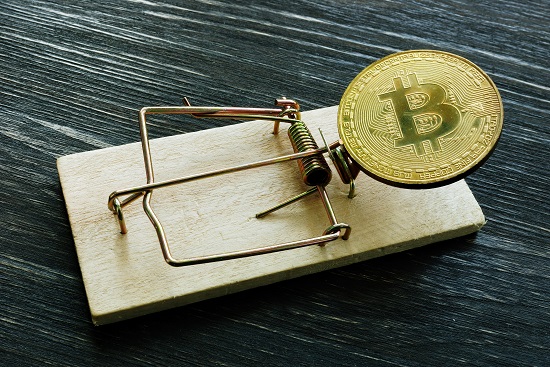
Who saw the documentary ‘The Tech Billionaire Takeover’ on BBC2? It frightened me how so many are so deluded about cryptocurrency. Well, to correct that, there is a small minority which has made itself very wealthy off the back of the growth of this giant Ponzi Scheme, preying on susceptible, perhaps especially naïve individuals who believe all the hype about being away from central governments and the tax system and often with fraud of some form not far away, as they don’t like any form of ‘control’ either, oddly enough.
It is sheer gambling. There is nothing behind ‘it’, aside from the ongoing faith and confidence in the participants and if that builds, then prices rise etc. It is not a currency. It is not safe nor backed by regulatory protections. Granted there are things called ‘stable coins’ which theoretically are backed by real assets but to what purpose are they? Who polices that? Regulations?
Why, in history, are human beings seemingly always so keen to believe the most absolute, unbelievable scams ever? Please be careful and frankly steer clear of ‘it’ in all its guises. There are no proven needs for this stuff anyway, even if/when the regulators offer some potential protection (and that may be one of their biggest mistakes ever, legitimising the ethereal and non-existent). Do you also know what is frightening – I am in the minority ‘brave enough’ to be prepared to call this-out for what it is…
Nationwide – for its members?

The AGM votes went as expected with the ‘Board’ able to wield its artificial ‘Quick Votes’ to support all its motions and deny the new director candidate a role, whilst protecting all their own, of course. I have to say that the behaviour and use of such things seems against the integrity of the FCA rules – there would be nothing stopping them doubling directors’ remuneration next year either… though the Board’s and the Chief Executive’s pay and bonuses were stratospheric as they were.
Funnily enough too, they tried to suppress the candidate’s application by saying he wasn’t qualified but I can’t see many high-level banking qualifications among all the present senior board members?
My best wishes
Philip J Milton DipFS CFPCM Chartered MCSI FPFS FCIB
Chartered Wealth Manager
Fellow Of The Personal Finance Society, Fellow Of The Chartered Institute Of Bankers