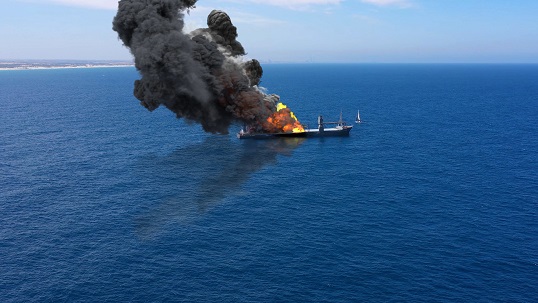
Oh dear, more uncertainties afflicting global markets as a consequence of the attacks on Iran and then the ramifications. They are dreadful and for the innocent people involved but as for the financial implications, on capital markets, maybe retrenchment reflects the ‘need’ for profit-taking it seems. This is even discounting unintended consequences, such as a weaker Pound and stronger Dollar.
However, short-term despite the significant rebounds today, it is time to batten-down the hatches, to not panic and to be grateful for very diversified investment strategies which have some things which will have risen in answer to the same events causing others to fall. Naturally there is never any ideal counterbalance but something is always better than nothing.
As for encashing market investments – make sure you do not do so at the ‘wrong time’ and nor when acute short-term volatility can mean selling is very unwise till stability returns. Within reason too but don’t also choose to change horses as you may sell-out on a very bad sentiment day and then end-up buying on a very good one, effectively caught between the stools and at great cost to you. Depending on your planned strategy (and not an ‘all-or-nothing’ exercise) but wait and don’t be persuaded by an adviser keen to extract his fee from you.
Most investors are realising too they don’t have many ‘hedges’ to the problems and rising gas, oil and aluminium prices (yes, significant volumes of that metal comes from the area). Not only won’t they have had much, if any, in the worlds of mining and precious metals but latterly they will also not have had anything much in the energy fields – namely oil producers, etc.
This has been compounded over the years by the ESG (‘ethical’) drive whereby investors have been encouraged to treat such investments as abhorrent, despite relying in their daily lives upon the related products made from the same resources or manufactured by their cheap energy of course. It’s not only fossil fuels but miners despoiling their environments to extract the copper and other crucial metals to fuel the green revolution, let alone the gold and silver with which they are still happy to adorn their bodies.
It’s not easy, it never is but clients will be pleased we take a more pragmatic and proactive view, as well as looking actively for real ‘hedges’ against what ‘may’ happen. The idea is that a negative event affecting, say, some shares can be offset (at least in part) by positive reaction affecting other things we hold instead.
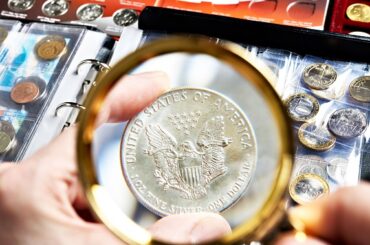
For example, the global wheat price has been diabolical for a long time but has ticked-up usefully these last few weeks, just as banks’ shares have fallen from highs, as rising inflation fears from the oil and gas price (and higher government borrowing costs to boot and a poorer economy) have hit them hard. No, there is not really ever any direct ‘protection’ – even gold and silver prices softened as the bombs started, after a colossal rise over the last few years and just as investors and holders of the stuff ‘imagined’ this safe haven would have risen even more on a rush to safety (as I have said, it’s perhaps too dear already, regardless).
Government bonds, the safest and strongest-backed of all financial instruments of course, also tumbled as inflation and higher borrowing cost fears knocked capital values – especially on longer-dated bonds. Is that what your adviser sold you as the safe part of your strategy?
Market synopsis

Uncertainly is what markets fear most, a statement I have made frequently over the decades. We have that in bucketfuls presently. How long will the ‘war’ against Iran continue, what might it do, what regime change will happen and how will that impact the future? The answers then link to ‘when will the Strait of Hormuz be safe to navigate again and global oil markets able to restabilise?’
Meantime, investors must be very wary of acute volatility. This is the friend of the courageous buyer who can exploit others’ mass panic but if you are selling something which has been affected, be very careful indeed as your timing could be atrocious (we bought a few things at the depths yesterday). Of course, very balanced portfolios of different assets should stand comparatively well though can be adversely affected if extreme ramifications take hold, just as what we endured with the Ukraine energy crisis, rising interest rates and the Pandemic.
To give an example, even yesterday and over the weekend the crude oil price moved between just north of $90 to over $120 a barrel as speculation and panic both took hold and then back again to $80 at one stage. Most are panic ‘buyers’ expecting further price increases but they may well be stung (or have already been stung) if global leaders agree to release oil stockpiles and a ceasefire arises. Maybe even daft countries like the UK will encourage more exploration and extraction from their own moth-balled oil and gas fields too, as energy security is more crucial than some Panglossian idyll targeting Net Zero in a mere few years.
The greater fears are not a higher petrol and heating oil/gas price, as bad as those are but what will it do for the economy as prices rise, taking inflation with it. The economy will falter and interest rates are likely to remain at higher levels than necessary – unless things appear so bad that cuts will be encouraged, to drive the economy but at what cost to Sterling and international confidence in us? Already the cost of government borrowing has jumped and as the UK is so skewed towards a far too cash consuming public sector and welfare spending programme, there is no headroom to accommodate external shocks like this.
These are the negatives – the positives are to keep your cool and to remember that investment returns from ‘balanced portfolios’ like our own comprise a number of things, some of which are unaffected in the short-term (and often the longer-term too). For example, interest on loan funds, dividends and rents from commercial property funds continue regardless – it is only short-term capital values afflicted by daily consensus.
There will always be good news’ pockets too, albeit scarcer when the general sentiment is negative – which in itself often means, more than anything, people just sitting on their hands. But stay rational and rely upon the knowledge that if your foundations are based on sensible planning and you have a very broadly based collection of different assets (as we endeavour to achieve for our clients), that they will have taken the necessary steps to weather any storm even if that does not mean absolute protection against whatever geopolitical events are thrown at us. Patience, however, is a crucial characteristic at such times.
As for new investors or those thinking about it, careful deployment of capital at such times can give a fantastic starting fillip to a sensible long-term strategy. Procrastination never pays. Also take advantage of annual tax and investment allowances, a good arm-twister to take some action regardless of ‘events’!
Encouraging news

To cheer you however, courtesy of the Financial Times, let me remind you of some facts The reality of a world after rupture
In 1950, almost 60% of the world’s population was in extreme poverty (measured now as existing on under $2.15 a day). Whilst wars and geopolitical events have made the figures plateau, today it is 10%, created broadly from the growth of benevolent capitalism and its cheap energy and which have also driven technological advances benefiting us all.
Naturally, with its inherent benefits come the problems – a swollen population and its growing, westernised-based, instantaneous consumer demands (and why can’t people have more and better?) and also growing life expectancies, fuelled especially by the colossal reduction in infant mortality, enhanced health measures and accessibility. For the poorest, in 1950 that was 30 but is now an amazing 65! For the Japanese, that has risen from 60 to 85 but as we know, a greater older population brings its own extra difficulties and expectations. Remember too, the population in 1950 was 2.5billion and is now 8.3billion.
So be grateful for what we have and next time you complain about some trivial matter that really doesn’t matter, remember that 10% of the world’s much larger population still has to manage on under $2.15 every day – to pay for everything.
Stamps as an investment? Forthcoming event
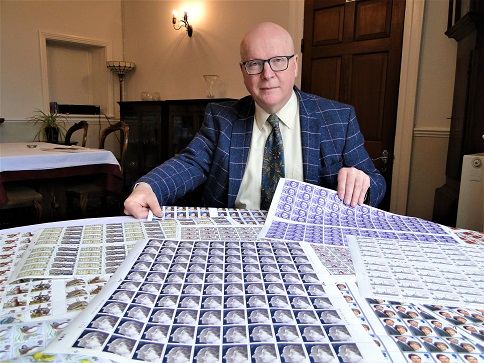
That’s an interesting concept! I have been a philatelist (well, stamp collector) since seven and have maintained my interest which has somewhat developed over the decades. We have several collectors as clients as well as dealers and retired dealers alike.
Whilst frequently collectors don’t sell their material, occasionally they move from one collecting interest to another and if they have bought wisely, yes, often they can not only recoup their costs but profit, in time, as values of special material keeps pace with and hopefully exceeds inflation but that should never be the purpose for the interest in the first instance.
Did you know, the most ever paid for a stamp was $9.5million? No, I don’t have that one and don’t collect British Guiana thankfully! But yes, I have several unique items and the odd one where another only exists in institutional collections, such as the King’s (which is probably the best in the world).
I don’t have the time really, to devote to this as perhaps I’d like but once a year the local Club twists my arm to show something to entertain the members. Gracefully they entitle this ‘Philip Milton entertains’ so I have carte blanche and try to show a wide variety to interest them, including what I hope appeals to the otherwise not so interested (such as stamp widows and widowers…).
The Club welcomes non-members so if you want to come along for a convivial evening, it is at the Castle Centre, Barnstaple on Thursday 19th March at 7.30pm and finishes around 9pm, with a break for a cuppa in the middle. We’d be delighted if anyone wishes to come and I’ll do my utmost to include things with local interests, some delightful, printed material going back the centuries and maybe some hens’ teeth philatelic items to keep collectors happy too.
If you use Facebook, why not take a look at our Taw & Torridge Stamp Club page too?
Good news/bad news

RM Infrastructure has agreed to distribute another £13million as part of its wind-down so we expect full underlying asset value – all good news. Cash from Aberdeen Diversified Income and Growth and JP Morgan Core’s also arrived.
Vistry, the leading UK housebuilder, delivers limp results and the shares slump 26% on the day – is this a better reflection of real underlying economic confidence which Chancellor Reeves didn’t deliver in her Spring Statement? Whatever, this is unhelpful for short-term performance for those holding them, however. I have to challenge the Company’s past buy-back programme too – all conducted thus far at the earlier, far higher share price levels.
Smaller companies v larger companies

An interesting dynamic happened on the UK market just before the Iranian issues. As a ‘value investor’, interest was doubly piqued! Smaller companies’ projected income yields are higher than those of larger companies. The simple received wisdom is that in the longer term, smaller companies offer better overall return prospects as they can grow rapidly versus their bigger brethren.
So, they ‘tend’ to not pay much in the way of dividends as they reinvest in the future and exponential growth opportunity (the theory being it’s easier to multiply the size of a small operation than a giant multinational one) – and that remains true. However, smaller companies have been so out of favour comparatively (globally in fact) for so long now, that not only do they offer better opportunities overall ostensibly but whilst you wait you will be paid a bigger reward of income as well. Some of this will also be neglect of them because of the investor concentration on index trackers placing most money in the biggest components and with nothing left for the tail at the bottom.
Our view presently, too, is also that these offer safer prospects than many of the larger companies (primarily the US ones) which have been over-bought and are over-valued and where the floor is a very long way down. The second simple conclusion too is that if ‘I am wrong’ and those US-led companies continue defying gravity, so what – these smaller companies, say, have more potential to double and double again than those giants do, with far less risk and more money paid to us whilst we wait. This is perhaps an investor’s utopia.
My best wishes
Philip J Milton DipFS CFPCM Chartered MCSI FPFS FCIB
Chartered Wealth Manager
Fellow Of The Personal Finance Society, Fellow Of The Chartered Institute Of Bankers