
So, early Saturday we awoke to news that bombings had taken place in Iran and the inevitable retaliation as a consequence. The weekend oil price jumped significantly and the world waits to digest the consequences.
It is too early to predict outcomes but the hope will be for a short, sharp shock and a return to a semblance of normality and with good fortune, a changed regime in Iran without barbaric extremists holding the Country and the world to ransom. Rest assured we are watching developments very carefully but there is no reason to panic unduly presently.
However, as ever our thoughts and minds are with the innocent afflicted by this as well as all those affected by the deterioration in relations in the Middle East – again.
A look at the UK economy
The word ‘unexpectedly’ expectedly raises its head again about the highest unemployment levels for five years and wage growth generally cooling. I am afraid that is naïve at best and fraudulent at worst – with the highest Minimum Wage in the world, ostensibly and swingeing increases in National Insurance for employers, was it really any surprise that people would employ fewer staff and escalate the AI revolution to reduce staff needs even further?
My fear too is for younger people – they have no work experience and thus who will be brave enough to take-on an ignorant novice for a role but at such a colossal cost now? It’s not about what the individual wants or needs but what the job is ‘worth’ to the employer.
Sterling has taken a hit as a consequence, as lower interest rates are implied, to compensate for the economic hit. Premium Bonds have acted in anticipation with the prize kitty cut to a miserly 3.3% (remember most ordinary holders see far less than that as the big prizes gobble-up large parts of the kitty). They will fall further when rates drop again – not an especially ‘good’ investment at the best of times, unless you are a super-rate taxpayer.
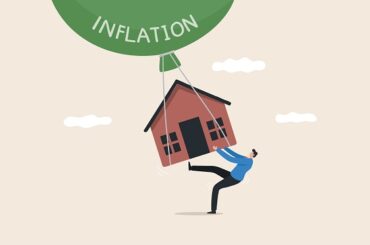
Good news is that finally inflation has dropped – to 3% – still above target, 50% above what Labour inherited (and the highest in the G7) but the ongoing consumer confidence concerns have driving sentiment. We read that bread and petrol price cuts are responsible but as labour costs have risen so far, commodity price changes will have little impact on the final price of ‘goods’ into the future. Again, this is more merit for lower interest rates.
Curiously, global wheat prices are remarkably low and cocoa prices have been plummeting – so our chocolate should begin to fall in cost if it is produced and sold by machines I guess… Meantime, retail sales in January rose by more than expected and driven by jewellery and antiques apparently; will too much enthusiasm also impact sentiments for interest rates? Driven by banks, general sentiment and miners, the FTSE100 rose to its highest ever levels as inflation and interest rate expectations are seen as positive for shares.
Obituary
Thank you to so many people for the kind comments following Mum’s death. Details of her Celebration service and gathering are:-

Tax take

The Chancellor enjoyed a whopping tax take in January, with the biggest ever surplus of income over expenditure, totalling £30.4billion. That can be seen as positive for the economy – or negative in that we didn’t need to be paying so much tax on everything (like employers’ National Insurance hikes). However, don’t be misled – government borrowing still teeters near 100% of the sum of the whole economy, with excessive public spending and benefits and too much tax taken, stifling enterprise and effort and increasing inflation.
More and more people are realising the Chancellor is taking more money from them. Capital Gains Tax receipts in January rose by 69% to £17billion in January though partly, I suggest, from strong investment gains and these will repeat next January for the present tax-year too. Inheritance Tax has also risen to £7.1billion in the first 10 months of 2025/6, up £100million on last year. Watch that grow next year too.
The numbers forced to complete Tax Returns because of levels of interest on deposits or dividends on shares, etc will also keep increasing as the tax-free allowances are so small now as well – a bureaucratic pain for many and often meaning the cost to employ a firm like our own to help them complete the task.
Net zero

It was/is a big mistake to levy such astronomical taxes on energy and then to pass-on these costs to business and private consumers. All forms of energy costs need cutting dramatically, to benefit private individuals and businesses, the latter because we are competing with a world which has significantly lower energy bills. Doing this will also cut inflation and all the nastiness which goes alongside that.
The Government’s latest ‘cut’ announced with great fanfare is artificial – energy prices are still way above what Labour inherited. The argument, the misguided persuasion, was that as we lead the moral way on the global stage in cutting fossil fuel use and aside from nuclear, ramping-up somewhat unreliable renewables (which need structural replacement with rapid regularity and vast cost, I should add) that other nations would look at us and emulate what we are doing (despite the fact we are a tiddler, contributing a mere 1% to global emissions as 99% is from elsewhere like China, India, Russia and the US, with the ‘third’ world chasing these tails rapidly as they develop their economies.
However, instead they now look-on and see that we are crippling our private residents and seeing business capitulate under impossible energy costs. This is impacting our economy, our prosperity, jobs and energy and food security – which, at the end of the day, create the wealth to pay for everything. There is no NHS nor welfare if we don’t have a buoyant economy.
These other nations look-on at our inane example and decide that following our example is a particularly poor choice and thus they do NOT do as we do at all, in fact the opposite – so actively albeit inadvertently we are dissuading them from pursuing such policies because of the awful economic outcomes we are suffering in the UK and certainly we are not encouraging them either in sensibly sustainable ones including economically affordable renewables.
All of us buying cheap goods manufactured or grown in the developing world (using their cheap fossil fuel energy) is not an acceptable solution either, is it, as we self-flagellate, piously pretending we are doing some good when of course we are doing the exact opposite – and by atrociously bad example. And ‘they’ who are blinkered at the altar of ‘green at all cost’, tell us our energy costs are high somehow because natural gas prices are high.
Well, clearly they don’t check the figures as they need to do – look at the price of natural gas since the peak at the time of the Russian invasion starting:- https://markets.businessinsider.com/commodities/natural-gas-price yes, that’s now almost half and cheaper before that upset started.
Credit cards

Most users of these things don’t realise they only receive the much-advertised interest-free purchases if they clear the card that month. That is a cheat which should be stopped, frankly. It is an abuse too of the poorest.
Did you know, the average American owes $5,000 (£3,700) on his Credit Cards, paying interest of around 21%pa to US Commercial Banks, up from 12% in 2015, representing a mere 10% of the total debt owed by the average consumer. Delinquency rates are the highest since 2011.
Here at home, the levels are lower at £1,400 but still startling. Total debt in 2021 was £56billion but in five years that has grown to the highest ever at £77bn, up 38%. The banks are pushing to increase penetration too. Just think about it too – deduct those who clear their cards every month (or who don’t use cards like that or at all) and so having no debt – the average borrower has a much bigger outstanding sum. Those with poor credit records pay much higher rates too – if they can borrow at all (maybe they shouldn’t be able to do so…).
I have to ask the question – are more and more people simply living well beyond their means? Yes. Does this mean that any economic wobble will leave us in Queer Street and also, how many people, especially in the US, have borrowed to speculate on the ever-growing equity and crypto markets (on the premise that naturally you can’t lose on this gambling activity) so that when these come tumbling-down, the pressure on selling will be even more intense?
Investment income

It is pleasing again to see that global income on shares has hit yet another new high, backed by increased payments from banks. A total of $2.1trillion was paid in 2025 according to Capital Group, up 7% and again outpacing inflation.
The fact that this flow of income is ‘sustainable’ and received regardless of what happens to the capital values of the underlying shares day by day in the short term if not the longer is not emphasised enough, nor recognised enough by savers, especially those who naively only use ‘cash’.
Minimum wage
Some interesting comments by Tim Martin here and the opportunities for the young especially – perhaps a well-intended policy taken to extremes ends-up disadvantaging the very people which it was designed especially to help. Wetherspoons boss Tim Martin warns minimum wage is lowering living standards | Business Live
Of course, the whole thing is inflationary too – raising costs which have to be charged to consumers for goods and services of course but even the public sector (the biggest employer by far) then has to raise taxes to pay the higher baseline figures and differentials so in the end, who actually gains from this vicious spiral? Charities and other non-profit organisations also suffer horribly as they have to try to raise more money to pay bigger employment costs – all on top of the swingeing increases in employers’ National Insurance too.
As I have said many times, cut outgoings (especially taxes on what we spend – which can be targeted to the poorest in Society) and then incomes do not need to increase so much (or at all?).
Good news/bad news

ME Group International shares slip after it suspends its shares temporarily pending further time for the auditor. The Company reiterates its previous views on trading outcomes and the share buybacks approved so the market worries something may be hiding under the surface – we hope and trust not, regardless. This is one to which we had been adding relatively small sums recently – after having exited successfully previously – so we know the Company quite well.
Meantime, Augmentum Fintech Investment Trust receives a bid at a 25% premium to the latest share price so we are very pleased. However, it is a shame, as the buyer notes the value in the underlying assets which is way above the share price and the bid is at a 30% discount to those. Maybe a higher price will endure or another suitor? Whilst valuing unquoted assets as it holds is always not as easy as those listed already, it is encouraging that another investment firm recognises the value by bidding in the first instance but perhaps another suitor will emerge. Meantime we shall watch developments. As ever, we wish we had committed to buying more but that’s being greedy!
I only said to our Investment Committee recently that you can go through a ‘purple patch’ of all news is good news (as we seem to have enjoyed for some time!) and then suddenly, uncorrelated assets can somehow have a period of disappointment and for no connective reason but yes, it happens. Emotion can mean that it is easier to dwell more on the downers than the uppers but as long as strategies are robustly positioned in the first instance, then any ‘damage’ should be limited and indeed the few continuing pieces of good news compensating for any bad. And yes, there are some and there must be as our total managed funds are fast approaching £310million and principally on the back of a strong performance https://www.miltonpj.net/services/portfolio-benchmark-returns
Diverse Income Investment Trust

The Board has proposed a closure of the Trust and a default into a unitised version. We don’t hold this but what a disappointment – and a good Trust being closed because of a naïve Board’s view, a Board that really should not perhaps be in charge of the Trust in the first place if it doesn’t understand the differences between an Investment Trust and a unitised fund. The discount is negligible too and not an issue. Smithson has already capitulated and Mr Terry Smith saw £1billion take the cash rather than the unitised version of the fund – ouch. Had he not asked then probably they would have stayed the course…
My best wishes
Philip J Milton DipFS CFPCM Chartered MCSI FPFS FCIB
Chartered Wealth Manager
Fellow Of The Personal Finance Society, Fellow Of The Chartered Institute Of Bankers