
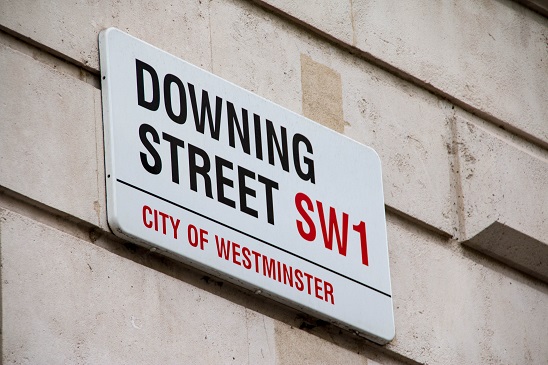
Well, potentially all change at the top. I remembered this quotation from a more contrite and accommodating man during the now old 2020 Labour leadership election. “When they [CPS staff] made mistakes, I carried the can. I never turn on my staff and you should never turn on your staff. I will carry the can for mistakes of any organisation I lead.”
I fear we have such a situation where an individual in senior leadership was never really the right character for the role and sadly now, either still doesn’t realise that or if he does, doesn’t want to recognise that the end is fast approaching. Yes, the quotation is from the same man but one not prepared to ‘carry the can’ despite previously baying for others to go on far more minor issues.
I fear for the Country for the successor however, as there could be much worse though perhaps a capable novice will emerge from the wings; I was impressed by the candour shown by backbencher Mr Jonathan Hinder on Newsnight on Monday for example but it is the Country’s need and not necessarily the Labour Party’s at the moment.
Meantime, the cost of government borrowing rises further and we are told sits at the highest since 1998 now – it’s not good and the UK is paying the highest of the larger economies of the world so neither ‘world events’ nor ‘the last lot’ can be blamed. The higher price of such borrowing will stifle government spending and increase budget deficits – will they dare to increase taxes yet again as we also don’t have ‘economic growth’.
Peace in our time

It’s a great headline and hopefully it is achievable both in the Middle East and also for Ukraine. Sadly of course, reflections upon Neville Chamberlain’s 1938 declaration following the agreement in Munich bode badly but we have to be eternal optimists. There are much better things to be doing than aggression constantly. I was unaware that Mr Chamberlain was offered a knighthood (and an earldom) by Churchill and declined it, wanting to be remembered simply. On that subject, Churchill turned-down two dukedoms too, to remain as an MP!
Investment Trusts v open-ended funds

Yes I know, I write about this frequently but the AIC’s latest review makes compelling reading. Forget ‘costs’ which invariably are prejudiced, shall I say, because they ignore certain attributes which apply but which are not necessarily reflected in headline quoted rates.
Here we go; its latest research has noted that if you had an Investment Trust, it has generated an extra 1.3%pa net return over the last 10 years compared to its sister open-ended fund. That’s data from 35 ‘sister funds’ where the same managers run both types with identical mandates. If you want to see more, visit:- About the AIC | The AIC
Clients will know we understand this and that we are not shackled to just the one sort of ‘fund’– we can and do use whatever we believe is best for our clients – end. I do explain ‘why’ this must always prove the case over time but there’s not enough space here – I fear too many advisers do not understand that though. I guess they are not going to recommend that their clients go elsewhere instead…
It is ‘funny’ that under ‘The Consumer Duty’ and the obligation on advisers and investment firms to achieve the best outcomes for clients (including on costs) that many (most?) investors do not use Investment Trusts (these are the quoted investment funds where to buy and sell them, you do so on the Stock Market, versus unitised funds where you buy or sell your units back to the host management company which has total control on pricing and valuations). Indeed, many platforms don’t allow Investment Trusts even and yet to be ‘independent’, the adviser has to be able to access the ‘whole of market’.
There are reasons why the facts are stacked in favour of these structures – but the evidence here is compelling. There are other factors too which need to be considered, both positive and negative. As clients know, we enjoy exploiting discounts to the underlying asset values as well and these have generated excellent additional bonuses unrelated to simple ‘performance’. If you, your adviser or your platform don’t even allow Investment Trusts or the whole gamut of such opportunities, then I have to leave the conclusions for you to draw.
Space

Thank you Simoney for quoting our last missive! Space: the final frontier for advisers? – FTAdviser
I feel humbled to be described as a veteran in the world of fund management but suppose, yes, I have been around a while – one of the longest in the industry still managing the same funds successfully!
Passive investing parasites

A fascinating take on the theme of ‘passive’ investing which anyone in love with the concept really should read:- Ben Gilbert: There’s no such thing as passive… at least not for multi-asset investors
I like the extra concepts – material which one can imagine that the aficionados from passive zealots to regulators alike (who only seem to look primarily at the ‘cost’) should heed. It reminds that even with Quantitative Easing and vast government purchases of their own bonds (well, central banks are backed by the states running them), vast capital losses really can arise even with the theoretically safest of assets – did you lose half your capital on Index-linked government bonds in 2022?)!
Governments have been disposing of their bonds bought at the peak and losing billions upon them as a result – especially, shall I say, ours. Dare I say that is probably a stupid move. It also points to SpaceX at the largest ever capital raise – guaranteed to succeed in theory because of passive necessity to support it (if it exists, passives (index-trackers) will have to own it). What’s it going to do with all that cash (in reality that is going to the existing shareholders selling out).
As I have been saying, ‘active management’ also means choosing what ‘passive’ assets to hold, when that’s the right thing to do too. It can never be an apathetic choice – as a big financial upset in some of the giants in the US will remind all those apathetic and passive investors.
Thanks

Just again, very grateful and humble thanks for a couple of unsolicited testimonials, one rather sad about clients who joined us in the last century.
‘My parents had an affection for all of you that I don’t believe is typical. You made them feel that not only were their finances in good hands, but that nothing they thought to ask was ever too much trouble!’
and for a deceased’s Estate for which we secured Probate and administered effectively:- ‘I would like to thank you for all your hard work and support over the last year. I realise that things have not always been easy for you but I very much appreciate everything you have done. It has been a pleasure working with you’.
Job opportunity

We have a post in our Investment Administration team in case anyone is interested or knows someone who may be? This would be for someone with administrative and financial competence and good computer skills. Please just drop us a full CV if you are interested!
Good news/bad news

Hargreaves Services’ tender cash received for 8.18% of our shares – £8.50 versus a share price nearer £7 when it was announced. We continue to like the Company! Meantime we shall enjoy this extra, brokerage-free, bonus return!
Schroder Capital Global Innovation announces another capital return and at a 45% premium to the share price – all good news. We shall subscribe our stock and no doubt keep buying in the after market – again, further ‘free’ bonuses for investors as it is only the discount being unlocked and unrelated to the underlying assets’ performance. Such bonuses will NEVER be seen if all you hold are unitised assets as do most retail investors out there.
Confounding the critics – the diary of a value investor

Or, having your cake and eating it. Value investors tend to be paid good income whilst they wait. Of course, it doesn’t always work but the principle is sounder than the neg ferrets suggest. Buy a value share cheaply, have an excessive level of income and in due time, the capital value can rise as well. Often a giant dose of patience can be required.
Take this example – Vodafone – and it doesn’t really matter what the prospects were or are going forward. By all accounts it is a dull investment, a utility business and it will be there tomorrow like it was yesterday. It’s no tiddler – market capitalisation (all its shares x current price) is over £25billion. So in Feb 2024 you could buy a share at 63p. The dividend yield then was over 6%.
Today the shares are £1.12 and the forward dividend yield 4%. So an investor buying at the bottom would have almost doubled their money and had 6% income. Of course, they don’t all work like that but it demonstrates the principle! One of the biggest buyers of the shares over that time? Vodafone itself, using excess cash and every share it has bought-in cheaply increases the returns for the remaining shareholders. It’s one of our biggest direct shares now and still rather dull but is the recent outcome dull? Yes, we started buying too soon but we chased to the base as well.
Investors in US tech may well care to remember that in the Dot.com bubble, Vodafone, very profitable at the time, briefly counted for 16% of the ‘British Stockmarket’ at over £4.59 a share. Indeed, it was/is one of the reasons the UK indices have underperformed the US by so much – artificial maths. But then, mobile telephony and bids for 4G licences were the AI, the tech of yesterday. Might Nvidia in a few years be only a quarter of today’s price? It is entirely possible – nay probable.
Remember, ‘TMT’ (Technology, Media and Telephony) counted for 40% of the value of the world’s stocks at the peak. How much did we have? Pretty much zero – that March we even trawled through all smaller company funds we had and if they held over 25% in tech etc, they were sold. Instead, we bought dull, boring ‘value’ stuff that ‘everyone’ was dumping because of its limp performance (ie lower share prices) to buy TMT…
Lynton open air theatre
 We are delighted to be the lead sponsor again of the production from 17-25 July at Valley of Rocks, Lynton (see the attached). The Signalman, a ghost story written by Charles Dickens and published in 1866, is being produced by Pleasuredome Theatre and the lead is Graham Dickens who is the great, great grandson of the author! Tickets are not unreasonably priced and it is a great experience (as long as the weather is great naturally but an alternative is made available in case of last-minute inclement conditions!).
We are donating 12 free tickets to the first clients who would like them, so may I suggest you contact us soon? You can choose the date to suit you! Should you wish to make a donation on the night, then that would be entirely up to you but otherwise, take a picnic and drinks and I trust some fortunate clients will enjoy the experience!
Wellesley – unregulated deposits and loans

Readers may recall this firm, with its very personable and enticing advertisements, especially on the TV. Well in the end, it went into administration as the entities to which it lent savers’ money went under and so the whole pack of cards imploded.
A string of complaints was made against the FCA for failing to regulate what it had been doing. It has now replied and not accepted liability as it has noted that it cannot regulate unregulated entities. Complaints are now likely to be pursued via the FCA Complaints Commissioner.
The whole subject is an interesting one; certainly regulation of regulated entities is its responsibility but when does it have a responsibility to act to stop activities which should be regulated or which are conducted by unregulated entities? It has acted recently against finfluencers, some which promoted things illegally, it seems, let alone straying into ‘advice’. Over recent years the biggest frauds have been in the unregulated space and yet the regulation has been oppressive for regulated entities, the vast majority of which is not committing heinous crimes but does great jobs even if there is always room for improvement.
It is indeed the FCA’s responsibility to take action against unregulated entities which are doing things which are illegal and indeed to its credit it does:- Three arrested in FCA crackdown on suspected illegal financial promotions
However, maybe the definitions need tightening and should include crypto currencies, property loans, all forms of peer-to-peer lenders (of which Wellesley was one theoretically), holiday lodges and cabins sold as ‘investments’ and well, I could go on, indeed anything packaged and bundled as ‘investments’ from wine to stamps and so on. There is a big difference between buying something which is likely to appreciate in value and being sold something as an ‘investment’. Meantime all I say is: do use regulated firms for your savings and investments – it’s not complicated, really.
Ethical investments?

A disturbing research paper has found that unsuspecting, albeit well-intentioned ESG investors were fuelling the Russian war machine as their ‘ethical’ funds, partly constrained by the ‘rules’ in terms of what they could buy, were buying Russian Bonds enthusiastically just before the Russian invasion of Ukraine and indeed after warnings had been made of what was happening and indeed as the tanks rolled across the border.
How European ESG investors helped Putin fund his war on Ukraine
They may have seemed ‘sustainable’ and ‘friendly’ but in fact, those same investors will have inadvertently been supporting the war machine. Probably now their managers have had to write the investments down to zero as well.
So far, we haven’t had any comment from firms which only sell so called ESG investments… as our clients will know, good intentions from what is typically simply a ‘deselective investment policy’ and not ‘active good to anyone at all’ is not the same, sadly, as the realities of the outcome. We didn’t have any Russian bonds in strategies… but yes, certain unsuspected Russian funds or assets in global funds will have been affected, yes but that’s not from ‘ethical’ grounds.
BLB Solicitors

This West Country law firm has gone bust and closed, with all staff made redundant. What could possibly have happened? Not being naïve but in the old days, professional firms used to have their owners, the partners’ private assets all up for grabs too so such things ‘wouldn’t’ happen though it is still bemusing to imagine how a large law firm could go under anyway.
What irks too is that the partners can go elsewhere, without any stigma or censure in reality and effectively take their clients with them to their new firms, without any payment for the goodwill to go to the old firm’s creditors as clearly the clients will want their affairs still overseen. Of course, client funds and assets are protected by the authorities at least to some extent (if not fully) but the administration costs and dealing with ex-client enquiries and files has to be borne by ‘someone’ like the SRA too. Whilst this is not illegal, there is a sense of immorality about it.
As a Firm, we preserve an excess of reserves both to ensure clients – and staff – can have full confidence just as our owners have full confidence too. Does your adviser leave a buffer in the business for unexpected issues? Maybe I’m just old fashioned but why didn’t BLB’s lawyers think the same I wonder? They were solvent according to last year’s accounts so why couldn’t the directors do something to keep the firm alive and pay all the creditors? How well financed is your lawyer?
Apologies
I am sorry but the cash distribution for Taylor Maritime is in US cents not pence so the amount we’ll receive is lower – well-spotted one eagle-eyed reader! Still a good bonus regardless but not quite as much as implied!
My best wishes
Philip J Milton DipFS CFPCM Chartered MCSI FPFS FCIB
Chartered Wealth Manager
Fellow Of The Personal Finance Society, Fellow Of The Chartered Institute Of Bankers