
Well, SpaceX debuted and rose very considerably in those early days, adding fortunes to Elon Musk’s fortune, before then falling a cool $1trillion the following week before rebounding slightly. This isn’t ‘investing’ but well done him and others for capitalising on this global tech feeding frenzy which doesn’t understand the difference.
Here at home, we await the inauguration of Andy Burnham as Labour’s new saviour – hopefully the Country’s. I have to say I wasn’t especially enthralled with his opening speech – lots of ‘sound bites’ but not a great deal of substance and he has had many years to practice… However, if major negative economic actions aren’t reversed and if he appoints the wrong Chancellor – it won’t be good. I do want to give him the benefit of the doubt but sadly that was sorely misplaced trust with Sir Keir and Rachel Reeves.
The backdrop is also one of the ‘highest long-term jobless in a decade’ – principally fuelled by enhanced benefits – all well-intended but being frank, it’s not the best outcome for the recipients, is it. That’s up almost 40% since Labour came to office. This figure excludes those on health-related benefits which are at an all-time high too – especially amongst the younger element, many of whom could be being condemned to a life on welfare and what sort of life, as opposed to working and achieving for themselves and their families and contributing to their society financially rather than drawing from it. One million young people fit this category and of those, 15% have degrees and 20% have ‘A’ levels.
With the advances of AI too, it’s not going to be the rate of pay which matters going forward but whether you have a benevolent employer happy to let you keep a job or take you on in the first place… The Milburn Review (ex-Labour Lord) is quite scathing – noting the levels of ‘economically inactive’ (for young people the worst since records began, in 2001) and referring to the worst worklessness crisis in 200 years, citing the ‘economic and moral crisis’ created for under 25s. One in seven graduates is not in work or further education.
Still, finally GDP has turned better, surprisingly and Gilt yields have been a little more stable as the highest ‘uncertainty’ has been replaced with slightly less uncertainty! The Pound has also been at its highest against the Euro for a year too. Learning recently that in 2020 the Treasury Department removed a maths’ proficiency test from job applications as they were not seeing adequate diversity makes me wonder what on earth has been happening but clearly, as well as those proficient in maths, to even-out the skill sets they have those who aren’t. Hmmm. I think too many of those had been helping Rachel Reeves…
Meantime the FT published an interesting chart of stock market bubbles over the decades and back to ‘the roaring 20s’ and the excessive exuberance (pretty-much all based on the advent of ‘new tech’) demonstrated, before an almighty realignment. Guess what – the US market and its AI-driven excitement trumps the lot of them. I think what is ‘bigger’ this time is the participation of ordinary people and the opportunity of ‘gearing-up’ massively (borrowed money of one form or another, margin dealing and options) – things which didn’t exist before. This does enhance positive returns but will also escalate the sell-off as those same people flee rapidly – taking ‘index-tracking’ funds with them. We are navigating things as best as we can and we have a significant, wary eye on downside protection for clients overall with ‘value-based’ assets away from most of ‘this stuff’ but it is hard.
Interestingly, it comes at a time, apparently, when US investors are very high on positive hope for their future and as a consequence they have comparatively small cash reserves as they have pumped ‘everything’ into stocks as of course, their favourite tech stocks only but go upwards. This is evidenced by two recent Bank of America surveys of those with over $3million investable showing their biggest monthly drop in cash for two years and the biggest ever rise in share exposure. The 10% cash is the lowest since the surveys started. This is still when the now underperforming ‘Magnificent Seven’ (will it be eight now?) make up over a third of the S&P’s ‘valuation’.
Pension tax-free cash

So a survey shows that the majority of those withdrawing tax-free cash from their pensions before the Budget regret doing so… we did try to warn people but too late now – the money is within the clutches of the Chancellor now!
Trends and hype
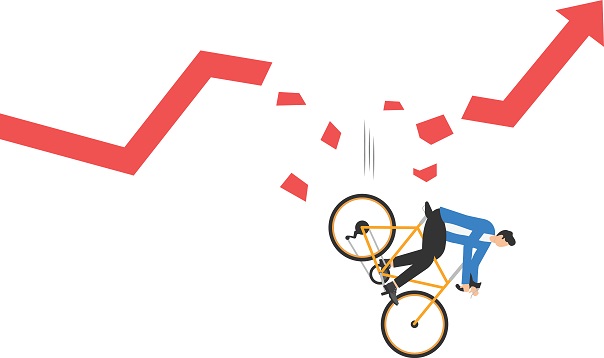
At the time, investors don’t like to imagine that they are in a blow-out trend. Admitted, it is hard not to be sucked along with them and the short-term narrative becoming the ‘excuse’ for what should be long-term investment decisions but all so often, we see them come… and go… and investors become sucked-in – especially if the asset class has done exceptionally well of late.
The themes almost disappear from the radar as the latest ones have already taken their place and it’s not about the opportunity, the potential, just the mad scrabble and usually excessive prices paid for the asset in that short-term (which can be days, weeks, months or even years sometimes). Of course, the opposite can happen too – opportunities languishing unloved for ages (we tend to like those because usually it means ‘cheap’ and ‘good, tangible value’…).
Who remembers the precious metals’ surge? Gold has now fallen by over a quarter and silver almost half from its bubble-like peak. We’d been buying physical silver previously and were trickling-out, the more expensive it became till all gone but sure enough, the adverts to entice new investors into the shiny metals abounded and people sent-off their cheques… ’Defence’, ‘House Builders’, ‘AI’, ‘Space Tech’, ‘Tech’ even residential houses – all have their day.
We still have some miners and have been stung by Vistry (ex Bovis Homes) but kept buying. We’re looking at what might be tomorrow’s, not yesterday’s. It may not be racy but we sold all our silver because it was far too dear – you read that here. So, what for tomorrow? We’re there in cheap investments for our clients in advance, we hope but ‘what’ would be telling in this medium, wouldn’t it!
And lastly, positively, Brent Crude Oil has now slipped to levels seen before the Iran war started. Who was filling-up on the stuff after it spiked upwards? That said, such energy companies remain remarkably under-valued presently – as we still very much need them for our ‘transition’. ‘Experts’ were predicting low prices weren’t going to happen for ages – and as recently as the week before they slipped under… The Iran situation reminded the world too about what else comes both from oil and its by-products and also materials from the Gulf area. That’s not going away near term.
Probate fees

Following the previous swingeing increases, the fees rise again on 13 July so any estates in course of progress should expedite applications – even if the figures need to change later. It is disgraceful that the minimum sum rises from £300 to £526. It is ‘tax’ in any other word and sadly costs which ‘they’ justify’ because of yet more inefficiencies in the public sector service sadly, just like shotgun and firearms’ licences.
Good news/bad news

As we have said before, if markets are buoyant, fund management companies are often too cheap as they are geared to them. If values rise, so does buying interest and their fees. Brokerages relying more on activity also do better as people tend to trade more often in positive environments.
We have noted the opportunities in many of these in the past and have participated in them and for many, their share prices lag the markets themselves. We have been pleased to see how CMC has rocketed again on its impressive results – up 42% on the day – quite ridiculous – the stock is now our largest direct equity and one we added across strategies as in our view it was such good value. We’d best trim a bit… It is heading towards quadrupling since last November.
Funny thing is too, brokers have revised their CMC share price projections upwards vastly… where were they all last year? It seemed obvious to us then but I never read any pundits recommending the stock then – to the contrary it seemed… That adds 0.6% to our total assets under management – an attractive part of the total return for the year in a mere couple of days.
We are still patient with many of our infrastructure Trusts – no great movement but it is security, hedging us against a major upset in the US markets too so as long as good individual outcomes like CMC arise, that counterbalance the necessary patience for better values of the underlying assets from within rather dull and unexciting projects of course!
Meantime as ‘normal conditions’ have been returning and mainstream stocks have rallied, energy stocks, hedges against the Middle East situation, have fallen and further really than they should, representing typically very good value and with strong natural incomes. As I have said before, we are not unhappy at their declines as they did their job during the worst of the crisis. That said, ‘normality’ for them is still higher than present levels so worth buying again!
Of course, it is never all just good news. That said, even the Sage of Omaha, Warren Buffett, makes mistakes. Berkshire Hathaway sold its Diageo stake in the spring at probably the lowest possible point and after losing half its money over three years – we’ve been buying but a little too soon (better too soon than too late). He should have bought more instead… He also said investing in Tesco was one of his biggest mistakes… we have just sold our last shares now, after a phenomenal run.
Income

Well done investors! Global dividend payments hit yet another record in the first quarter of 2026 according to the Capital Group. It’s what investors in cash don’t seem to grasp – the opportunity for a good income, capital increases and increasing income over time too! There are simple reasons why that is and always will be the case (not always with everything naturally) and I shall elaborate again one day… our participating clients understand in spades!
Presentations

I have attended a few presentations recently and some of the presenters came across to me as rather ‘slovenly’ and well, not especially ‘professional’ and lacking the inspiration I should have expected to have seen. I am not talking about ties and suits here necessarily but well, if ‘you’ seen somewhat nonchalant, slouched, can’t be bothered to prepare properly and then deliver your best, in a knowledgeable, confident and clear fashion, then is this communicating something about how you do your business generally?
Familiarly and complacency are not the recipe and I hope and trust that is not how we present ourselves to our clients and prospective clients either! It might not matter so much in some physical trades and with different expectations in certain ‘creative’ quarters but this is about money management where diligence, control, regulatory strictness, attention to detail and so on are rather important… especially as the sums can be quite large too.
Conversely, I have also had some very professional interactions where I have come away even more confident in the knowledge and skills of the presenters and their entity and thus encouragement for the use of that person/funds etc.
My best wishes
Philip J Milton DipFS CFPCM Chartered MCSI FPFS FCIB
Chartered Wealth Manager
Fellow Of The Personal Finance Society, Fellow Of The Chartered Institute Of Bankers